
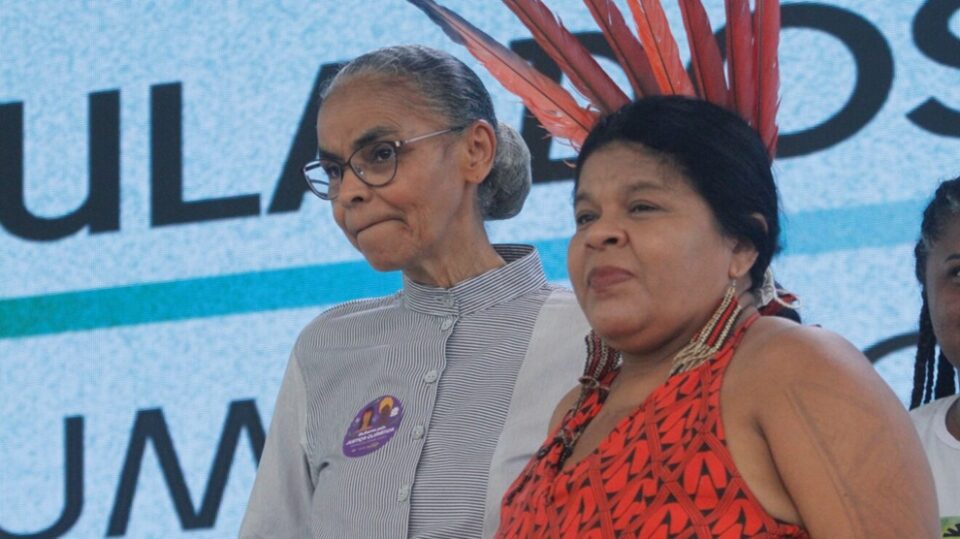
Under the slogan “We are the answer”, traditional and indigenous communities are calling for a new focus in climate justice. The People’s COP has make a call to change the script.
After four years, the COP has once again been held in a democratic country. I say “democratic” but I’m not sure that’s the word to describe a system that allows more than 120 people to be massacred at the hands of the police, even if what happened in the outskirts of Rio just a few weeks ago already seems to be old news. Then again, in Spain we’re still flaunting our impunity regarding the 2014 Tarajal incident and nobody has called our democracy into question, so I guess we can just take the term “democratic” with a pinch of salt.
Anyway, let’s move on. This COP, in contrast to those held in Egypt, Dubai and Azerbaijan, had a strong grassroots turnout. Global media was able to spread the story of the Munduruku people’s protest as they blocked the entrance to the official COP headquarters, the practice of mass public demonstrations was revived, and dozens of fringe spaces popped up, bringing together thousands of people to synthesise and fine-tune alternative proposals. With a strong presence of Indigenous voices in every debate (whether official or informal), as well as the momentum of the Landless Workers’ Movement (MST) and other traditional communities (ribeirinhos, quilombolas, and so on), this was truly “The Peoples’ COP”. Aside from providing a platform for these groups’ demands to be heard, this diversity could also bring about a much more profound change of direction.
Allow me another tangent. If you have read the manifesto of the Peoples’ Summit, you will have come across the somewhat confusing concept of “extractivist communities”. After all, isn’t extractivism what we’ve been fighting against? In Brazil, this concept was coined by organised Indigenous communities, ribeirinhos (riverside dwellers) and seringueiros (rubber collectors) together with Chico Mendes to refer to traditional practices – fishing, gathering, family farming, and so on – that enable communities to sustain themselves while also preserving ecosystems. Thanks to their efforts, Extractivist Reserves were created in the 1980s to protect these territories and the Indigenous and traditional communities that inhabit them.